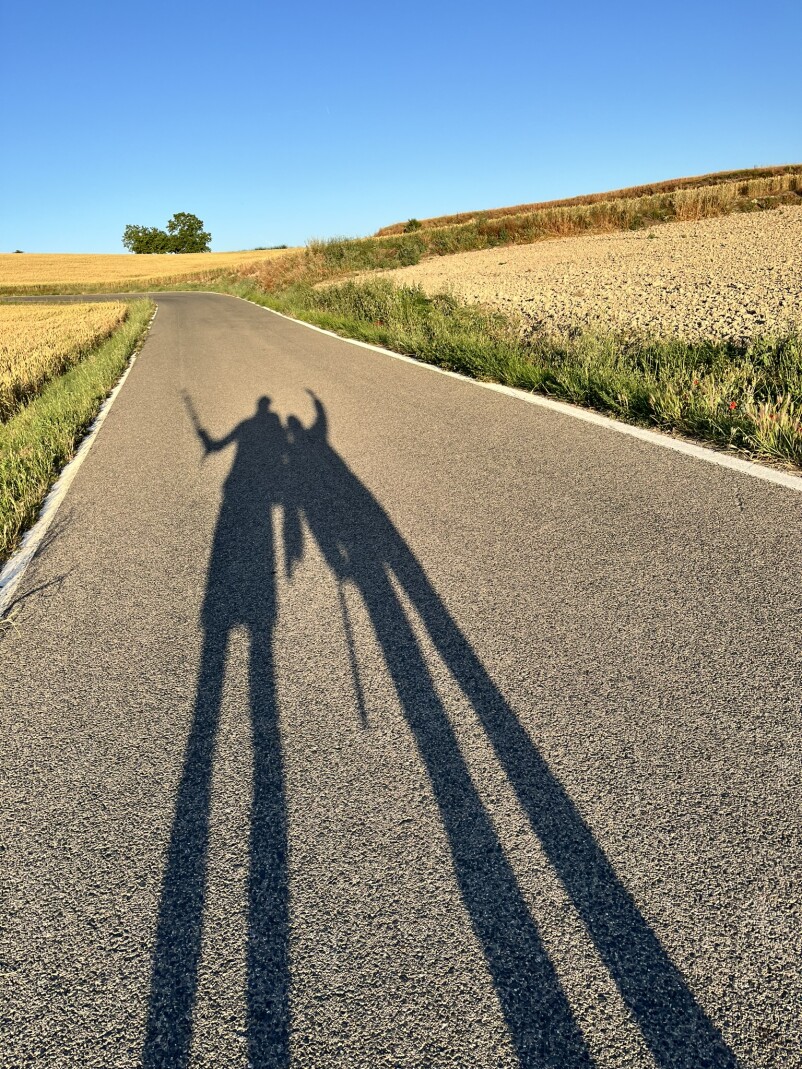
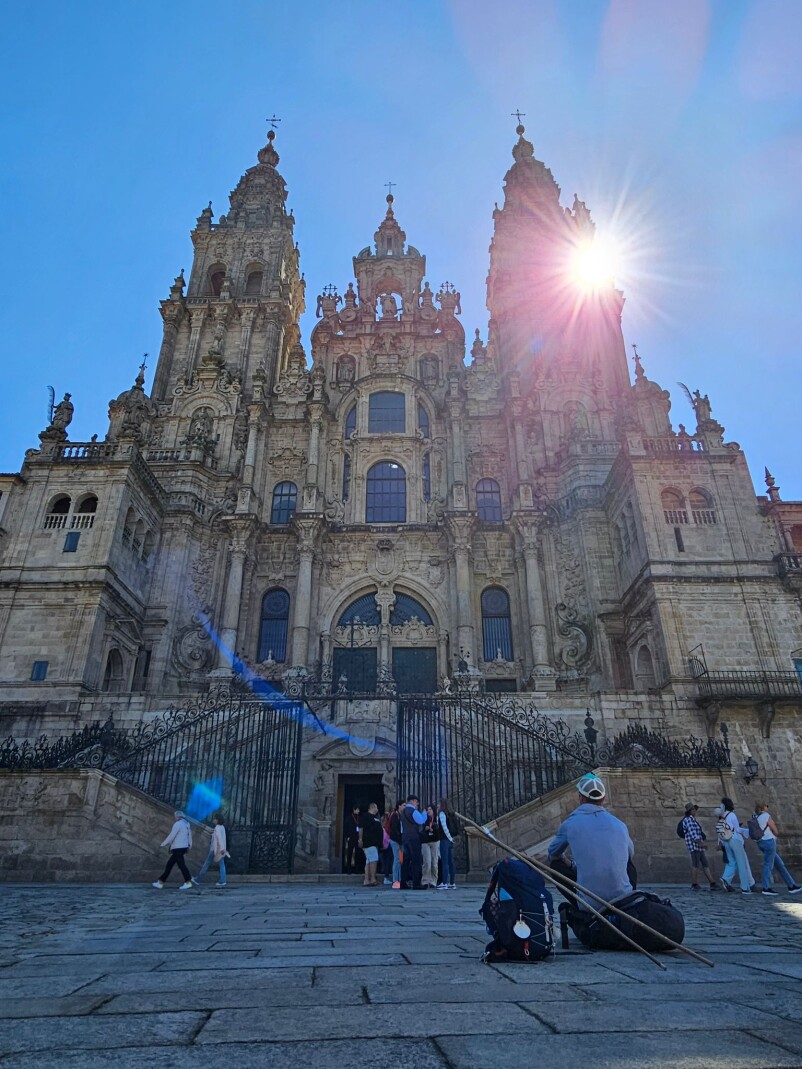
Walking the Camino de Santiago was a journey of a lifetime. Setting off on 10 June from St. Jean Pied de Port, a small village in southern France, and 36 days and 900km later, after hiking through the Pyrenees, traversing the rolling vineyards of the Meseta, passing through the medieval cities of Pamplona, Logroña, Burgos, León, and Santiago de Compostela, I arrived into Finisterre, the ‘end of the earth’, a small fishing village on the west coast of northern Spain. Watching the sun set over the Atlantic with my fellow pilgrims on my final day was a special moment.
The Camino de Santiago, or the Way of Saint James, is a historic pilgrimage to the Cathedral of Santiago de Compostela. According to legend, the apostle Saint James, or San Tiago, was laid to rest on the Iberian Peninsula where a shepherd once saw a brilliant star shining above a field one night. This place became known as Compostela, meaning the “field of stars” and a city grew there, attracting pilgrim travellers from all corners of the Christian world.
At its peak in the 14th century, the pilgrimage, also known as the ‘Milky Way’ as pilgrims used the stars to guide their journey at night, was travelled by over a million people every year. Today, the Camino de Santiago offers several different routes all leading to the Cathedral of Santiago de Compostela - each route has its own unique history, landscapes, and challenges. I chose to walk the Camino Francés (the French Way) which starts in southern France and weaves its way across northern Spain to Santiago de Compostela. From Santiago de Compostela, I continued my journey west to the coastal town of Muxia and then onwards to Finisterre.
Everyone has their reasons for walking the Camino. For many, it’s a spiritual journey – a way of reconnecting to oneself and perhaps one’s faith – on a deeper level away from the busyness and distractions of daily life. Many people I met were going through a period of transition – a graduation, a career change, a relationship change, or perhaps a retirement.
For me, the Camino was an opportunity to mark the end of one chapter of my career and the beginning of another. I was also drawn to the adventure and the challenge of hiking across northern Spain with nothing more than my rucksack containing the bare essentials.
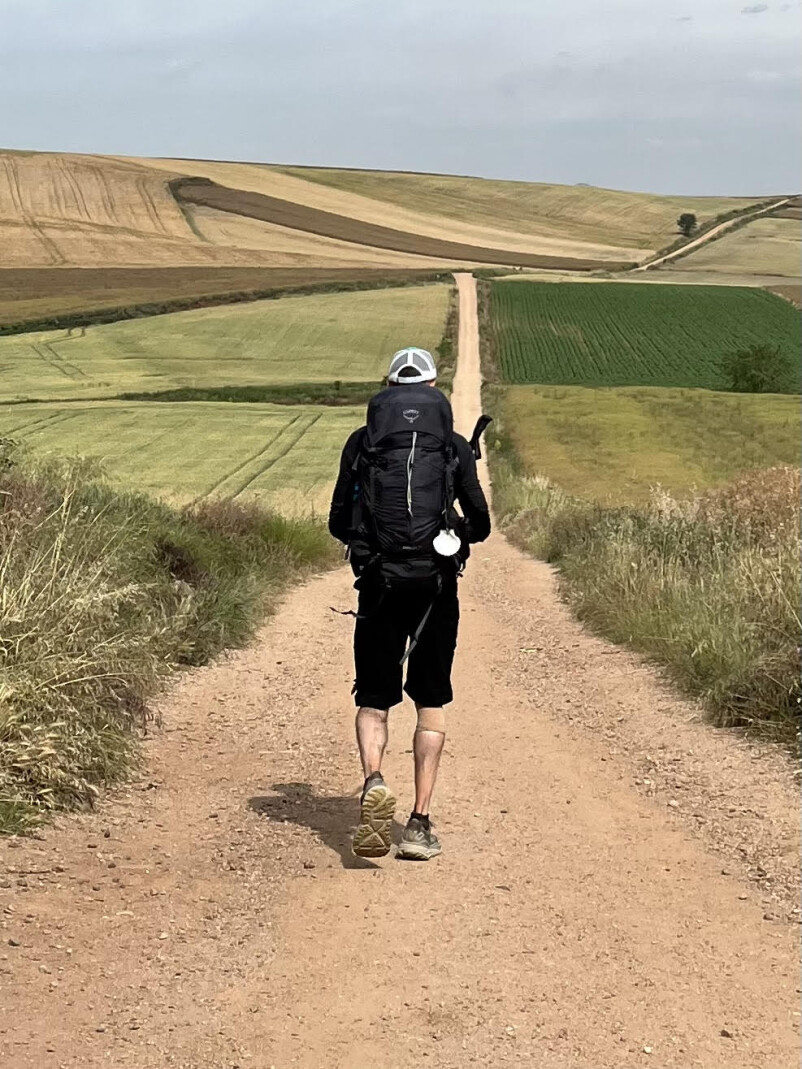
In true pilgrim fashion I decided to travel light, very light. I decided two of everything would suffice… two t-shirts, two base layers, two hoodies, two pairs of shorts, two pairs of socks, and two pairs of jocks! And a bar of soap to wash myself and my clothes each day.
I also packed a rain jacket, hiking trousers, trainers, flip flops, a baseball cap and a towel. And I had my phone, phone charger, portable charger, kindle, journal, water bottle, a torch and trekking poles. A silk sleeping bag liner would hopefully keep any bed bugs at bay! In the end, my bag weighed a little over 8 kilos.
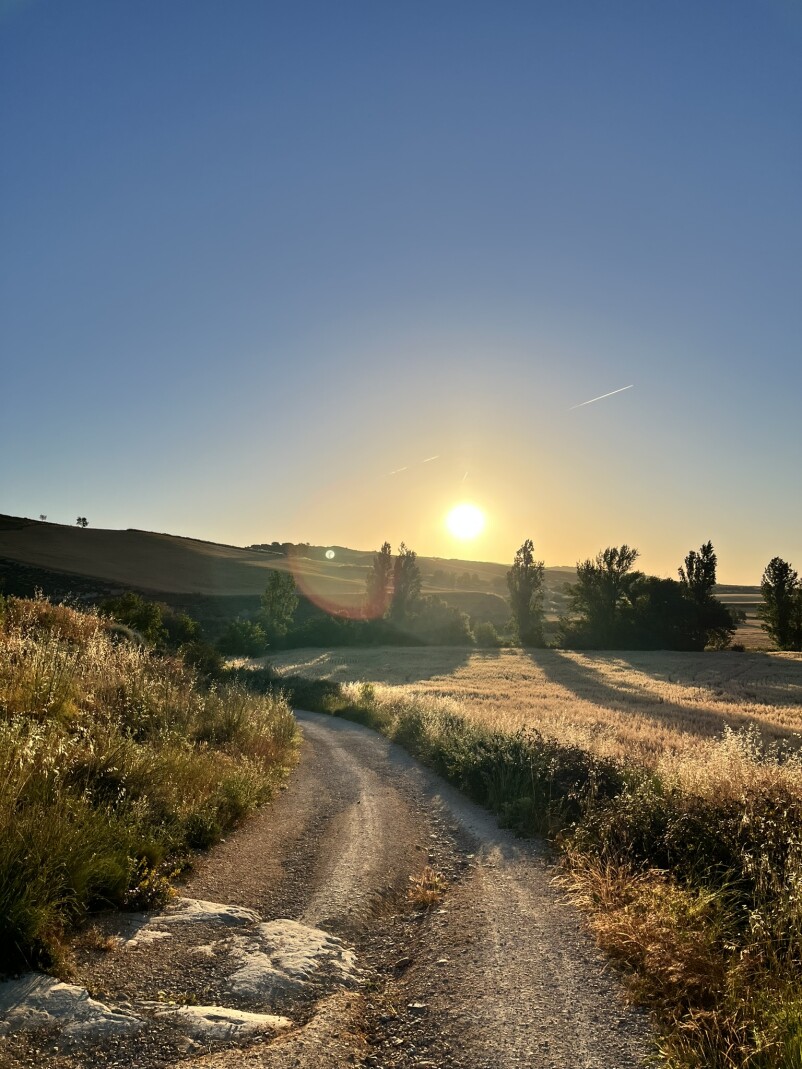
There was a great sense of freedom setting off each morning, often before sunrise, with my rucksack on my back and not knowing, or worrying about, where I’d stop for the night. Staying in local hostels dedicated to pilgrims, known as albergues, cost about €10 per night, and usually meant falling asleep to a symphony of snoring!
I read somewhere that the Camino is not about the destination, it’s about the journey and for me, it was as much about the people I met on the journey as the journey itself. Walking and talking, laughing with, and learning from, so many people from all walks of life and all corners of the world from pastors to priests, college students to consultants, and mormons to mystics… sometimes for hours, sometimes for days, and sometimes for weeks, each with their own unique story, was an unforgettable experience.
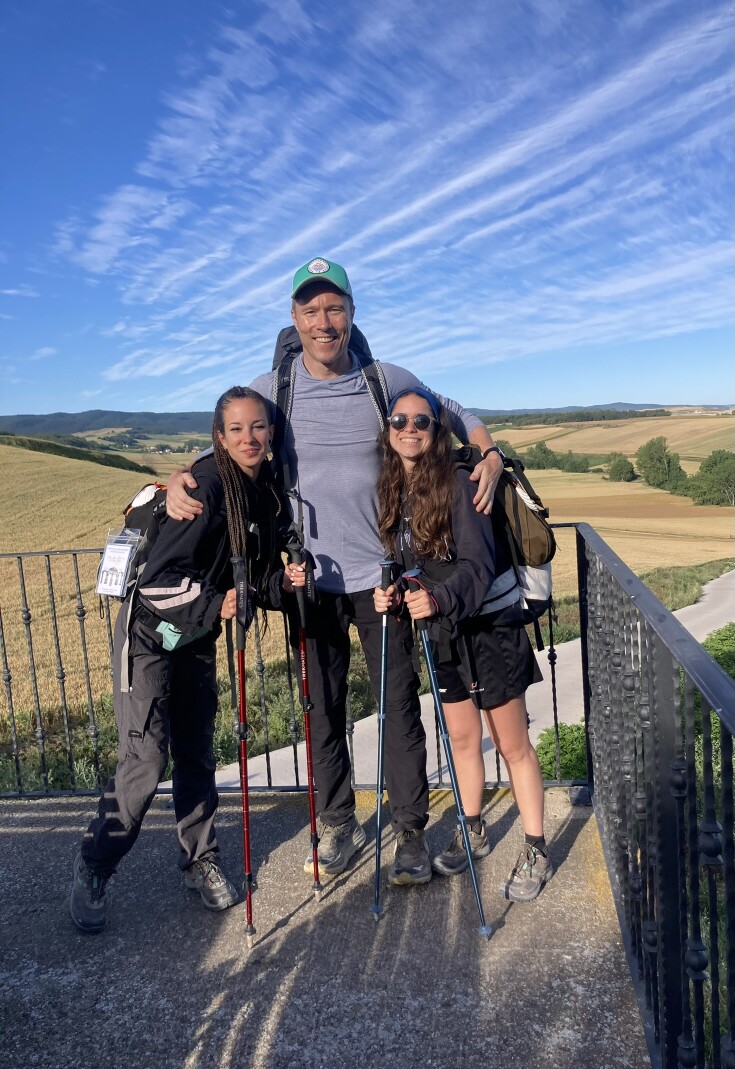
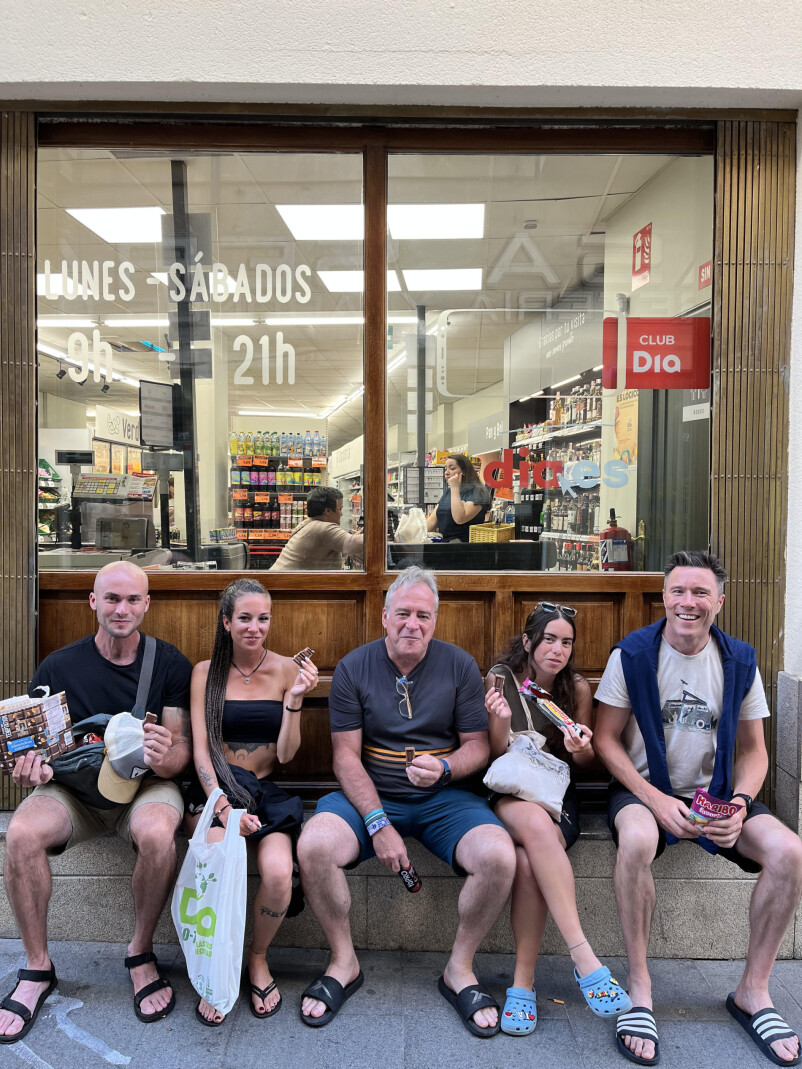
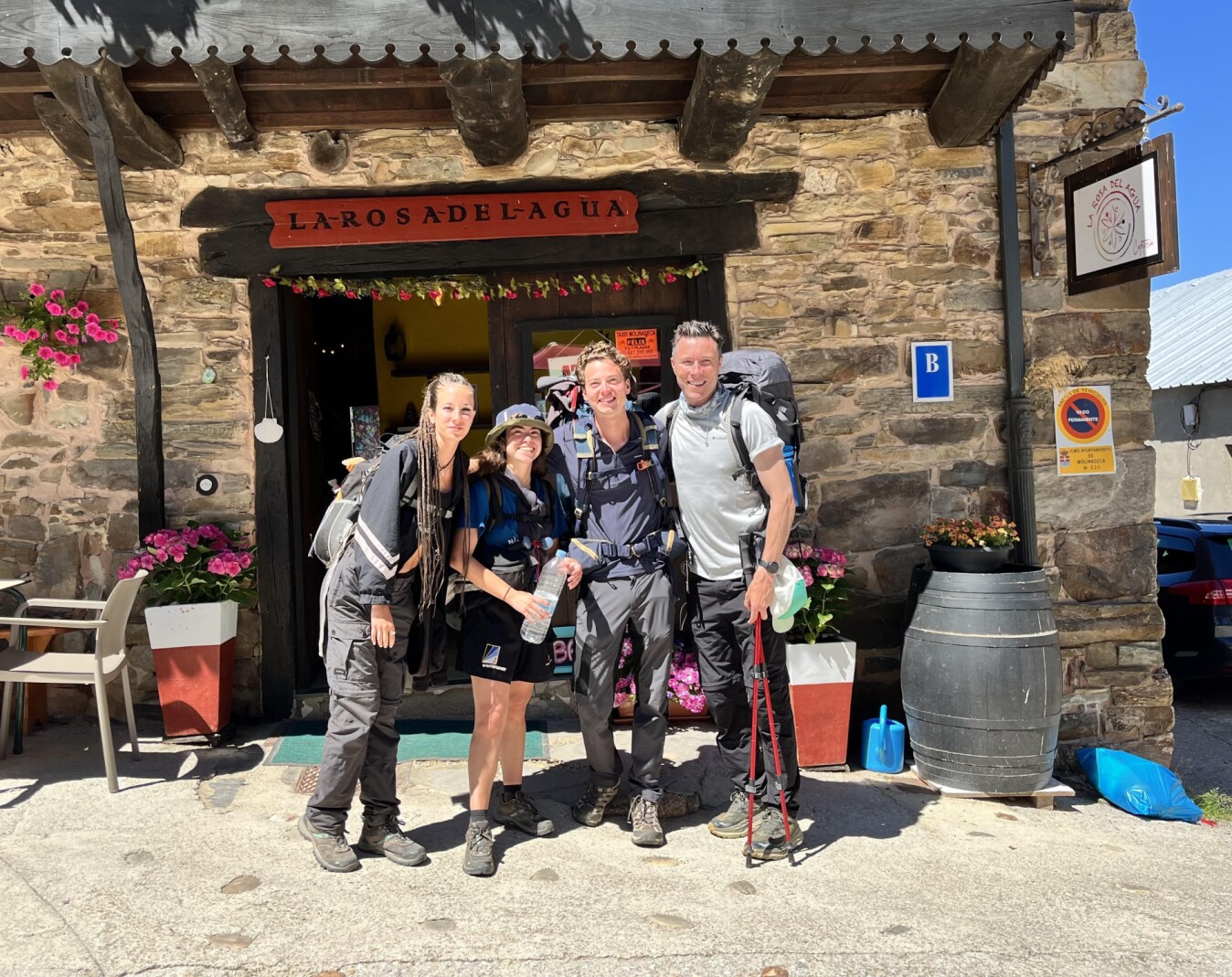
Over time, a motley group of fellow pilgrims from Spain, France, the US, Korea, Denmark, and the Netherlands formed a unique bond as we walked and hiked our way across northern Spain. While many of the pilgrims I met were solo travellers, I was struck by the number of families I met along the way - mothers and daughters, mothers and sons, fathers and daughters, and fathers and sons. Each embarking on a unique and possibly once in a lifetime journey together. I walked for several days with three generations of the same Spanish family – Mercedes, aged 80, Eduardo, aged 56, and Andrea, aged 22.
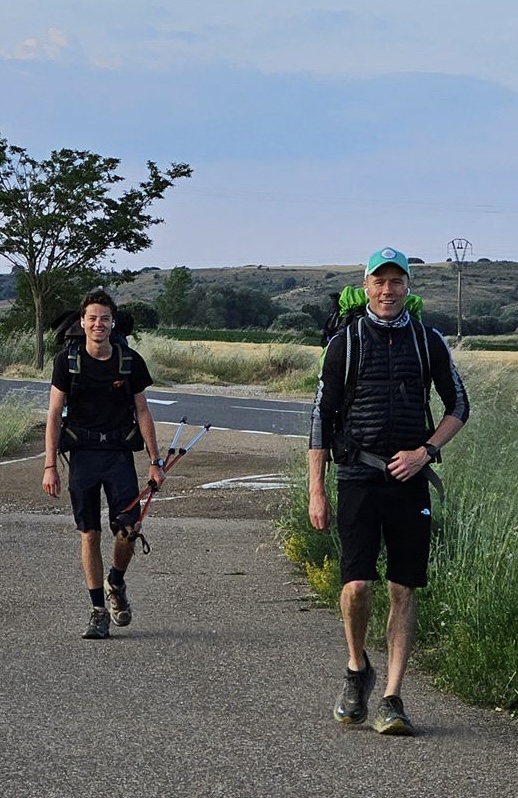
While the Camino provided plenty of time for reflection, it also provided many moments of side-splitting, belly-aching laughter! These moments were often spearheaded by younger members of our motley group – Emile, a recent university graduate from Lille, and Henar and Andrea, from Catalonia. The simplest of things – taking a wrong turn on the road or a story getting completely lost in translation – often provided moments of unexpected comedy.
While there was lots of fun, the Camino also provided an opportunity to learn from those that I walked with. Eduardo, a palliative care consultant from Spain, taught me so much about life and living in the present moment. As we walked and talked, Eduardo told me stories about his patients and the special bond of love and friendship that often formed. One day, as we hiked high into the Galician mountains, I asked Eduardo what was the secret to living a good life. Eduardo stopped, looked at me, smiled and said, “Brian, when we learn to accept that we will die, it is then that we learn how to live.”
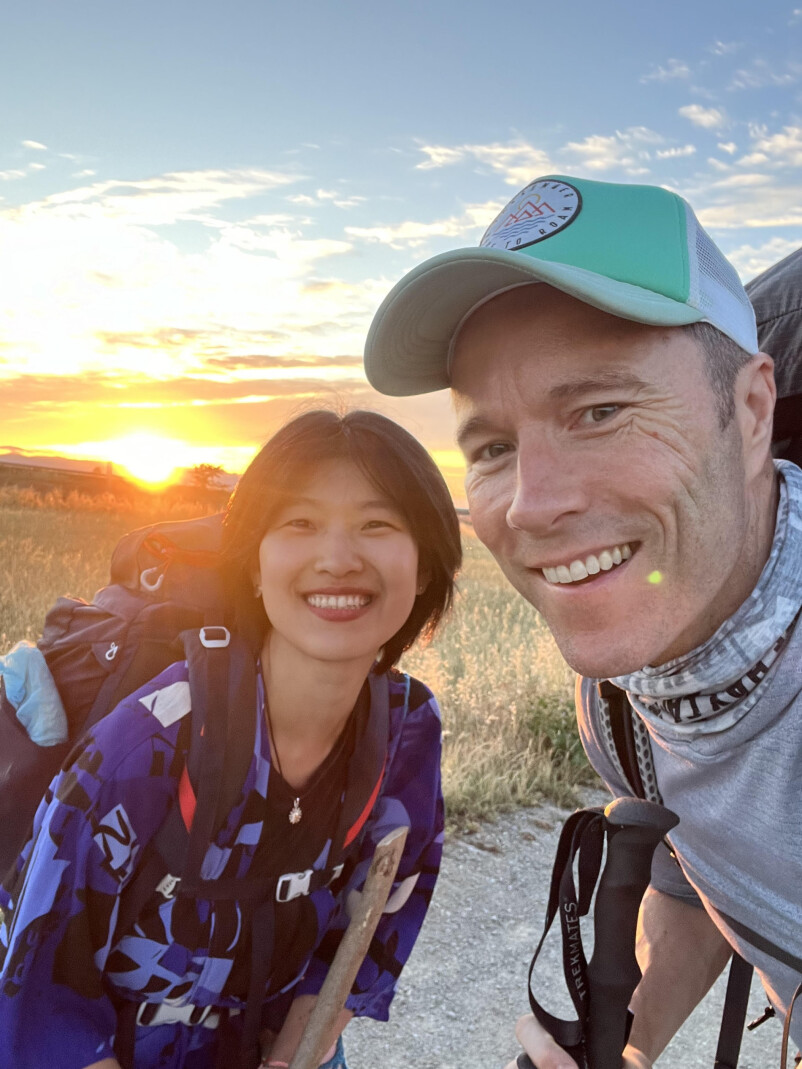
For several weeks, I walked with Eunyoung, and her mother Nancho, from Seoul. As we journeyed together, I noticed a serenity about how they lived each day – they never rushed, they never raised their voices, and were always so polite and so courteous to everyone they met. They seemed to be able savour the present moment. And they walked with a quiet determination that I really admired.
Whenever a challenge presented itself to the group, Eunyoung would often say, in her gentle yet determined voice, “we must smile and try”. When we arrived into Santiago, one of the highlights of my trip, a group of us went for a celebratory dinner. I was contemplating walking a much longer distance the following day so that I would reach the west coast of Spain on foot. Over dinner, I mentioned that I’d decided to take a bus some of the way. Eunyoung looked at me aghast and said, “Brian, you must smile and try!”.
So, with that, I set off the following morning at 9am with little more than 4 hours sleep and at 10pm that night, on tired legs and a wobbly knee, having walked close to 60km, I stumbled into my albergue. I hiked that day alone and looking back, it was one of the happiest days of my Camino experience. It was an endurance test, I got completely lost on top of a mountain, my legs really hurt, but the magnificent scenery – the lush forests and rugged mountaintops – and the sense of total freedom and contentment I experienced that day will live long in the memory.
The Camino was also an opportunity to walk and talk with people from various religious and spiritual backgrounds. Walking with Grant, Ethan, Jordan and Jackson, four college students from Brigham Young University in Utah, provided an opportunity to learn about their Mormon faith. I was taken by their positivity, maturity, and acts of kindness to all of those they met along the way. For several days, I walked with a Pastor, named Rich, from Texas. When our paths crossed, Rich would often greet me with a warm smile and say, “Brian, can I pray with you today?” and with that, Rich would place one hand on my shoulder and say a prayer for my safe journey to Santiago.
The Camino is also an exercise in the art of letting go – of plans, of expectations, and of control. For me, this meant letting go of the need to control my journey – of booking hostels in advance, of the idea that I had to arrive into Santigo on a set date – and learning to go with the flow and allowing each day to unfold in its own way.
It also meant letting go of my anxieties about staying in the local albergues. Before I began my journey, the idea of sharing a dormitory with up to 100 fellow pilgrims filled me with dread. How would I sleep at night? And yet, very quickly, I adjusted to this new environment.
I came to appreciate the sense of community the hostels offered – they were full of fun and laughter. Sharing a meal after a long day of walking with fellow pilgrims fostered a sense of camaraderie. I came to realise that everyone was on a separate journey and yet, everyone was on the same journey.
The Camino also offers physical distance and emotional space to let go of, or release, the past. This act of letting go is symbolised at the Cruz de Ferro, or Iron Cross, which stands at one of the highest points on the Camino Francés – serving as a place of reflection, release and renewal.
We arrived at the cross on the first of July under clear blue skies and the most magnificent sun. Aside from our group of four that walked together that day, there was no one there. It was the calmest of days, the only noise being the singing of birds in the distance.
Here, we left the stones we had carried throughout our journeys at the base of the cross, each stone symbolising something we wished to let go of – perhaps an emotional burden or a past regret. Having quietly placed our stones at the foot of the cross, we sat together in silence for some time before continuing on our journey.
The Camino was also full of unexpected moments that had a lasting impact. One day, while walking late into the afternoon with Emile, the young French man from Lille, we stumbled upon San Nicolás de Puente Fitero - a tenth century former chapel now run as a pilgrim hostel by Italian volunteers. There’s no charge to stay there, only a request to make a donation upon departure.
The hostel itself has no electricity - lighting is entirely by candles with cooking done on a gas stove. What made this experience so unique was the ceremony before dinner. Those of us who had been given accommodation for the night were invited to sit in a semicircle in the chapel. The Italian volunteers, resplendent in black capes adorned with scallop shells, proceeded to wash, dry, and kiss our feet and then bless each of us in turn.
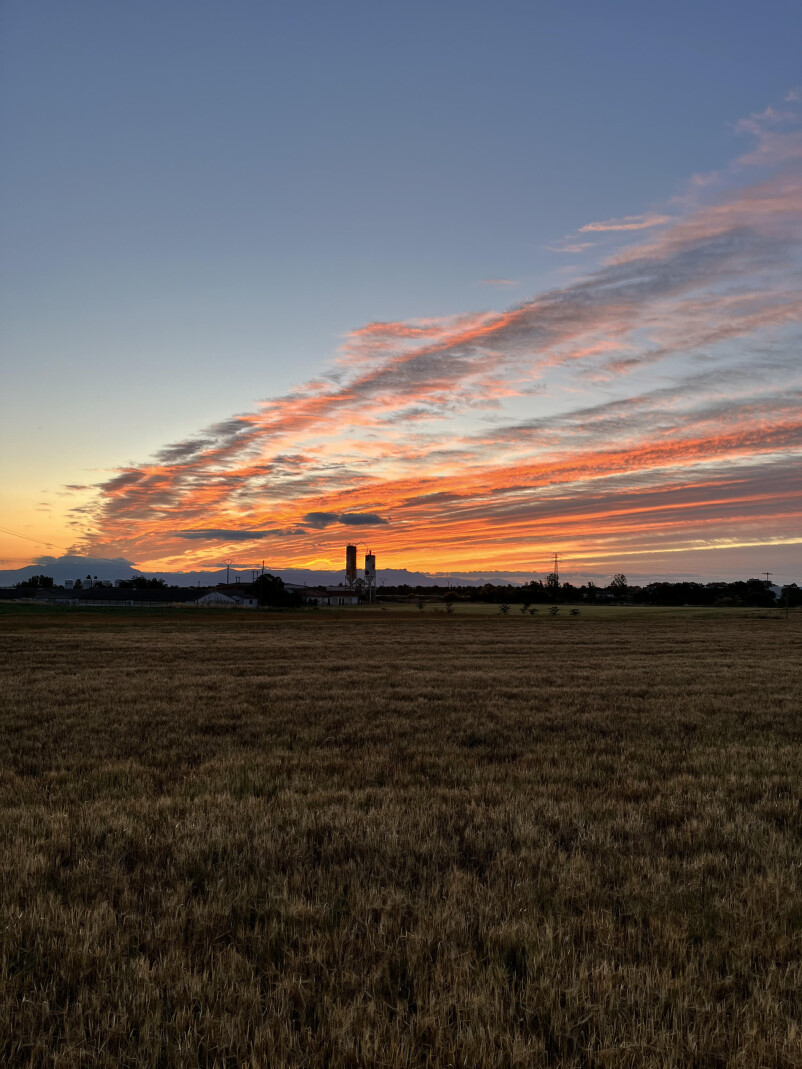
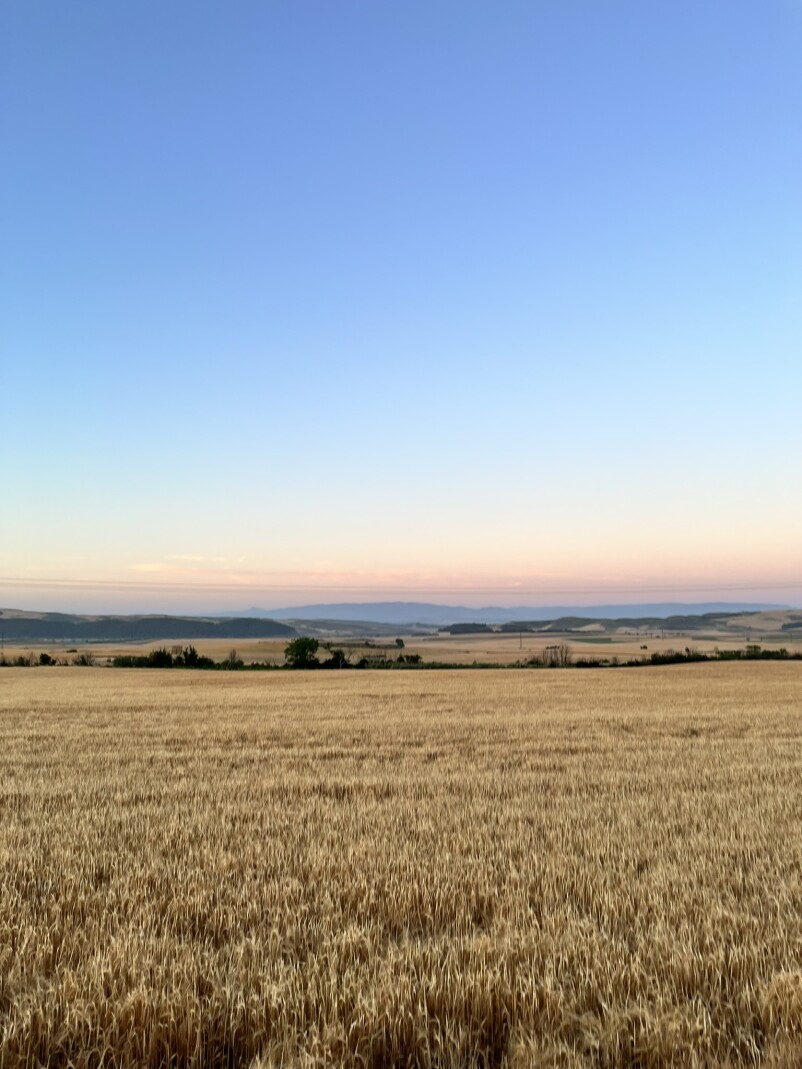
Thinking back on my Camino, there are so many memorable moments. The spectacular sunrises and sunsets, the majestic cities, the gothic cathedrals, the diverse landscapes from the vast open plains and lush forests to the stunning mountain vistas and seemingly endless poppy fields.
There’s a beauty to the simplicity and rhythm of life on the Camino – walking, eating, sleeping – that becomes meditative. The natural beauty of the landscape, the shared experiences with fellow pilgrims, the moments of hardship and the moments of joy, combine to make it a transformative experience.
In many ways, the Camino becomes a metaphor for life itself. Lessons learned on the Camino about patience, perseverance, kindness, and love, translate into valuable lessons for life. The Camino taught me how to appreciate the beauty of everyday life, to be grateful for what I have, to go with the flow, and to live with a little more ease in the space between the no longer and the not yet.